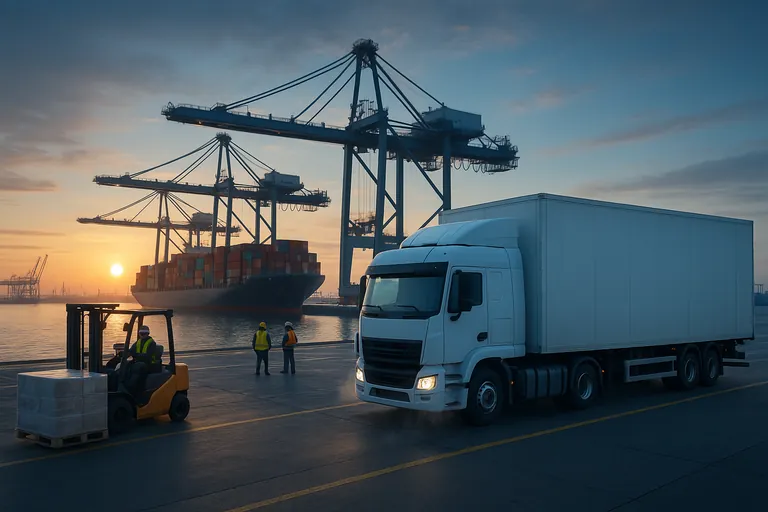
A practical playbook for planning a mixed-container order of Indonesian IQF vegetables in 2026. Realistic MOQs by SKU, retail vs foodservice pack sizes, pallet and carton planning, Surabaya/Jakarta consolidation, and cold-chain must-dos.
If you are planning a 2026 frozen program, here is the straight talk buyers keep asking us for. What MOQs really look like. Whether you can mix IQF SKUs in one 40-foot reefer. How to pick pack sizes that move. And a simple way to build a loading plan that survives real-world constraints, not just spreadsheets.
The top 10 Indonesian IQF vegetables buyers are choosing in 2026
In our experience, these are the SKUs global buyers return to because they balance demand, yield, and logistics.
-
Premium Frozen Sweet Corn. Consistent sweetness and yields. Typical per-SKU MOQ: bulk 10 kg cartons 3–5 MT. Private label 1 kg 6–10 MT. See product: Premium Frozen Sweet Corn.
-
Premium Frozen Edamame. Strong foodservice and retail overlap. Typical MOQ: in-shell 4–6 MT. Shelled 5–8 MT. Private label 400 g or 1 kg often 8–12 MT. See product: Premium Frozen Edamame.
-
Frozen Mixed Vegetables. Standard corn, carrot, beans, peas. Flexible blends. Typical MOQ: 5–8 MT per blend. See product: Frozen Mixed Vegetables.
-
Premium Frozen Okra. Whole or cut. Popular in MENA and South Asia. Typical MOQ: whole 2–3 MT. sliced 3–5 MT. See product: Premium Frozen Okra.
-
Frozen Paprika Bell Peppers. Red, yellow, green, or mixed. Typical MOQ: 2–4 MT per color or cut. See product: Frozen Paprika (Bell Peppers) - Red, Yellow, Green & Mixed.
-
Premium Frozen Potatoes. Pre-fried cuts. Higher line-run needs. Typical MOQ: 10–18 MT per cut and specification. See product: Premium Frozen Potatoes.
-
Cut Green Beans. Simple spec. Good filler for mixed containers. Typical MOQ: 2–3 MT.
-
Carrot Dice or Slices. Steady demand for blends and processing. Typical MOQ: 2–3 MT.
-
Broccoli Florets. Retail and foodservice staple. Typical MOQ: 3–5 MT.
-
Cauliflower Florets. Often paired with broccoli. Typical MOQ: 3–5 MT.
Takeaway. You can usually build a balanced 24–27 MT 40-foot reefer with 6–10 SKUs. Heavier cut potato runs skew the mix. Everything else can scale in 2–5 MT blocks.
What do MOQs actually look like in the real world?
We see three drivers behind Indonesian IQF vegetables MOQ. Changeover time, printed-film economics, and seasonal raw material loads.
- Bulk 10 kg cartons. Lowest per-SKU MOQ. Expect 2–5 MT. Edamame and mixed veg run higher because of line setup and sorting.
- Retail 300–500 g and 1 kg. Packaging changeovers push MOQs up. Private label often starts at 6–12 MT per SKU or 25,000–50,000 bags depending on bag size and film. Digital print can drop that to 5,000–10,000 bags if timelines allow.
- Foodservice 2.5 kg. Sweet spot for kitchens. Typical MOQ 4–8 MT per SKU.
Two non-obvious ways to hit MOQ faster. Share artwork across similar SKUs by using a common back panel and color-coded front. And standardize master carton dimensions so you can layer-mix compatible SKUs on the same pallet without wasting space.
Can you mix several IQF SKUs in one 40-foot reefer from Indonesia?
Yes. That is how most first and second orders start. The key is to plan a 40ft reefer loading plan around pallet configuration and carton uniformity.
- Pallet types in Indonesia. You will see 1000 x 1200 mm and 1100 x 1100 mm. Both work. A 40-foot reefer typically fits about 20 pallets of 1000 x 1200 or up to 22–24 Euro pallets depending on carrier and exact dimensions. Confirm with your forwarder before finalizing counts.
- Pallet height. Aim for 2.2 m including pallet. Keep headspace for air circulation. Do not exceed line-mark limits inside the reefer.
- Mixed pallets. Only mix SKUs on the same pallet if master carton footprints and heights match. Layer by layer. Use slipsheets and put clear layer labels. If specs or carton sizes differ, keep SKUs on dedicated pallets.
A quick calculation example. If your 1 kg retail master is 400 x 260 x 200 mm, you can place 5 x 3 cartons per layer on a 1000 x 1200 pallet. That is 15 cartons per layer. At 10 layers, you get 150 cartons per pallet. At 10 kg net per master, that is 1.5 MT per pallet. Multiply by 20 pallets to estimate 30 MT theoretical. Real shipments land around 24–27 MT once you account for pallet weight, dunnage, and some SKU gaps. Always build a draft plan, then trim to the reefer payload limit from your carrier.
Need a tailored 40ft reefer plan with your SKUs and carton sizes? We are happy to map it. You can Contact us on whatsapp.
Which pack sizes move best for retail vs foodservice?
What we recommend in 2026.
- Retail. 400–500 g for bell peppers and mixed veg. 1 kg for corn, broccoli, and edamame. Clean front-of-pack with one hero application photo. Storage statement Keep frozen at or below -18°C.
- Foodservice. 2.5 kg works for most kitchens. It reduces outer cartons and speeds defrost planning. Some chains want 1 x 10 kg bulk for processing lines.
- Private label pack sizes. If you are testing, start with a generic film and a sticker program for 1–2 cycles. Then move to printed film once reorders solidify. For our own lines, see Premium Frozen Sweet Corn, Premium Frozen Edamame, and Frozen Mixed Vegetables as baseline specs.
2026 production calendar and lead times you should plan for
Indonesia runs multiple harvests across regions. But line time and film lead times set the pace.
- Bulk 10 kg. 2–4 weeks from PO to stuffing if raw is in stock and specs are standard.
- Retail or foodservice bagged. 5–8 weeks if printed film is required. Digital or generic film can cut this to 3–5 weeks.
- Seasonal pinch points. Late Q1 around Ramadan and pre-Eid can slow inland trucking. Year-end sailings get tight. Build 10–14 days of buffer around those windows.
- Port choices. Surabaya Tanjung Perak is efficient for East Java processors. Jakarta Tanjung Priok is best for multi-supplier consolidation and broader sailing options. We often consolidate in Surabaya or Jakarta cold stores at -20°C, then stuff within a 2–4 hour window.
Do you need special documentation for mixed-SKU frozen containers?
Mixed SKUs mean cleaner paperwork, not more. Here is the short list we align to for EU and US lanes.
- Commercial invoice. Break down by SKU with HS codes, pack size, and net weights.
- Packing list. Pallet-level details. Lot and production dates. Cartons per pallet and dimensions.
- Certificate of origin. Typically issued under the applicable trade scheme your buyer uses.
- Health or sanitary certificate. Issued by Indonesia’s Agricultural Quarantine Agency for plant products when required by the destination market. Some markets waive phyto for processed frozen. Check your lane.
- Temperature records. Pre-cooling and voyage data loggers. Many buyers require them for release.
- US and EU labeling. Country of origin, product name, net weight, ingredients 100% vegetable name, storage Keep frozen at or below -18°C, lot code, production date or best-before date. Nutrition panel and importer details as required by FDA or EU FIC. Vent settings 0 for frozen are not a label item, but note them on the stuffing report.
Cold-chain must-dos from plant to your door
We have seen perfect containers get rejected because of two simple misses. Warm cores and blocked airflow.
- Pre-cool product. Core temperature at -18°C before stuffing. Do not rely on the reefer to pull down warm product. IQF texture suffers if you do.
- Set point. -18°C supply air. Vents closed at 0. Continuous mode for frozen. Check both the controller and the shipper’s instruction sheet.
- Airflow. Keep cartons off the reefer walls. Respect the T-floor. No wrapping that blocks the floor. Use corner boards and top frames to stabilize.
- Load pattern. Start from the front and work back. Leave a clear return-air channel. Avoid odd stacks that create dead zones.
- Monitoring. Place 3–4 data loggers. Door, middle, and rear. Photograph setpoint and logger placement at stuffing. Keep a signed stuffing checklist.
LCL vs FCL, consolidation in Surabaya or Jakarta, and trial pallets
Can you ship LCL frozen. You can, but we rarely recommend it for IQF vegetables. Cross-handling and plug-in gaps add risk, and storage at third-party depots is rarely controlled to spec. If you must test, do a trial pallet as part of an FCL with a consolidator you trust. We arrange mixed-container IQF consolidations out of Surabaya and Jakarta with pre-cooled staging at -20°C and fixed two-hour stuffing windows. That keeps temperature drift minimal.
The five mistakes we see most and how to avoid them
- Mixing carton footprints on the same pallet. Result. Tilted stacks and crushed corners. Fix. Standardize carton sizes or segregate by pallet.
- Underestimating film lead times for private label. Fix. Approve dielines early. Keep a generic fallback.
- Setting the reefer to -20°C with warm cores. Fix. Always pre-freeze. Setpoint cannot fix warm product.
- Overloading past the reefer payload. Fix. Calculate gross pallet weights. Trim counts before the truck arrives.
- LCL trials with poor cold-chain control. Fix. Use FCL mixed pallets. If you need small-volume validation, combine with another FCL or use a qualified frozen consolidator.
Ready to build your 40-foot plan?
If you want a fast, realistic loading plan with MOQs, pallet counts, and a Surabaya or Jakarta stuffing schedule, we can put a draft together in a day using your target SKUs. Start by shortlisting from our frozen range. View our products. If you already have carton sizes and desired pack mix, you can also Contact us on whatsapp and we will send back a proposed 40ft reefer loading plan with options for retail, foodservice 2.5 kg, and bulk 10 kg.
One last thought. The best Indonesian IQF programs are boring in the best way. Predictable cartons, clean paperwork, consistent setpoints, and a loading plan that has been rehearsed on paper before the first pallet moves. When that is in place, the rest follows.