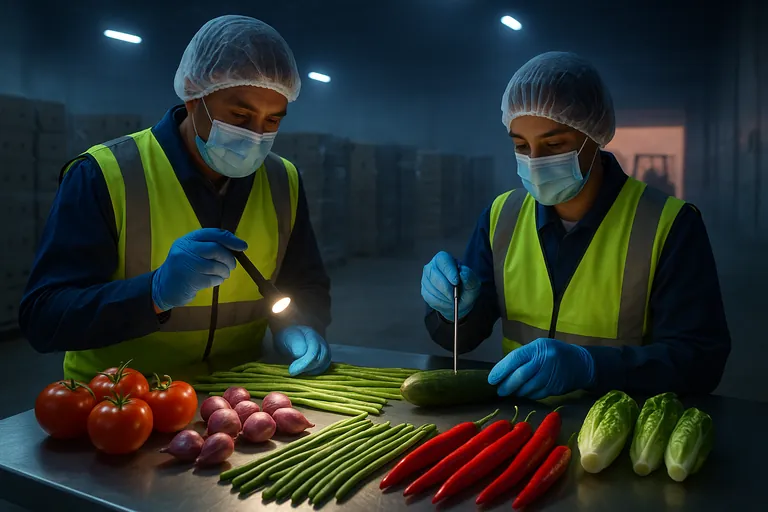
A practical, field-tested playbook for claiming zero ASEAN duty on Indonesian vegetables in 2026 using ATIGA e-Form D or AWSC. Step-by-step, with HS/PSR mapping, RVC 40 calculation, and fixes for ASEAN Single Window issues.
We’ve helped buyers cut duty bills to zero in a single shipment cycle using one simple system: get the HS code right, prove origin cleanly, and make sure the e-Form D actually lands in the importing customs system. That sounds obvious. In practice, it’s where most claims stumble. Here’s the 2026 guide we use in our own export operations.
The 3 pillars of a successful ATIGA claim
-
Map HS and PSR before you quote. Don’t wait until after booking space. For vegetables, this decides whether you can use Wholly Obtained (WO) or need RVC 40.
-
Lock down origin evidence. If it’s not grown here, you’ll need bills of materials, supplier origin statements, and a clean RVC build-up or build-down.
-
Transmit cleanly and verify receipt. An e-Form D that never lands in the ASEAN Single Window on the importer’s side might as well not exist.
We’ll walk these pillars with concrete examples, then answer the questions we get every week from buyers and partners across ASEAN.
Step-by-step: from quote to clearance
-
Pre-quote classification. Confirm HS using AHTN 2022 descriptions. Fresh cucumbers like our Japanese Cucumber (Kyuri) typically fall under HS 0707 (fresh or chilled). Fresh tomatoes under HS 0702, onions under HS 0703, eggplant under HS 0709.30, lettuces under HS 0705. Most frozen vegetables and blends, like our Frozen Mixed Vegetables, land in HS 0710.
-
Choose the correct origin route. Fresh, unprocessed vegetables that are planted, grown, and harvested in Indonesia are WO. Processed or mixed items under HS 0710 usually need RVC 40 or CTH. For mixtures within the same heading, CTH may fail. We plan for RVC 40.
-
Prepare your ATIGA file. For WO: farm records and harvest logs tied to lots. For RVC: BOM with supplier invoices, origin statements for ASEAN materials, and costed packaging. Keep it audit-ready.
-
Apply and transmit. In Indonesia, e-Form D applications run through the Ministry of Trade’s e-SKA platform integrated with INSW. On approval, the e-Form D is sent through the ASEAN Single Window to the importer’s customs. We always verify receipt on both ends.
-
Importer lodgement. The importer declares ATIGA preferential tariff at clearance. They reference the e-Form D number and pick the correct preference scheme in their national system. If the system already shows “e-Form D received,” clearance tends to be smooth.
A practical RVC 40 example for HS 0710
Scenario: Frozen Mixed Vegetables HS 0710.90. FOB value USD 1,000. Non-originating inputs: peas from non-ASEAN supplier USD 180; Chinese retail pouches USD 30. ASEAN-origin inputs: Indonesian carrots and beans USD 280; Indonesian sweet corn USD 220. Local processing, labor, and overhead USD 250. Freight and insurance excluded from FOB.
Using the build-down formula under ATIGA: RVC = [(FOB − Value of Non-Originating Materials) / FOB] × 100
RVC = [(1,000 − (180 + 30)) / 1,000] × 100 = 79%
79% comfortably exceeds RVC 40. Under ATIGA, ASEAN cumulation lets you treat qualifying ASEAN-origin inputs as originating. In our case, all Indonesian inputs count as originating. If you swapped in Thai-origin corn with proof of ASEAN origin, it would also count as originating under cumulation.
Takeaway: Run the RVC math before you price. Small packaging decisions can push you below 40% if you’re close to the line.
Do I still need a Form D if I’m an AWSC certified exporter for vegetables?
If you’re on the ASEAN-Wide Self-Certification (AWSC) list, you can make an Origin Declaration on your commercial invoice instead of getting a Form D. In our experience, most ASEAN customs now accept AWSC smoothly in 2026. However, some buyers’ internal SOPs still ask for an e-Form D because their systems are aligned to it. We check the importer’s preference before shipment. If in doubt, we issue an e-Form D. The marginal admin cost is cheaper than a clearance delay.
How do I choose the correct HS code to meet ATIGA rules of origin?
Start with product state and processing. Fresh cucumbers like Japanese Cucumber (Kyuri) are typically HS 0707 and qualify as WO if grown in Indonesia. Frozen prepared items like Premium Frozen Edamame usually sit in HS 0710 and need RVC 40 or CTH. Mixed vegetables under 0710.90 often rely on RVC 40 because CTH won’t apply when all components are in the same heading.
Where to confirm: check the importing country’s AHTN 2022 tariff schedule or national tariff finder. If classification is borderline, get a binding ruling from the importer’s customs before you quote.
Who issues ATIGA Form D in Indonesia and how long does approval take?
Form D is issued by Indonesia’s Ministry of Trade through authorized issuing offices using the e-SKA system integrated with the Indonesia National Single Window (INSW). With complete documents, approval is usually same day to 1 working day. For first-time exporters, new HS codes, or RVC-heavy cases, plan 2–3 working days.
How long is an ATIGA e-Form D valid, and can it be issued retrospectively in 2026?
Validity is typically 12 months from the date of issuance. Retrospective issuance is allowed under ATIGA in justified cases. The certificate will indicate “Issued Retroactively.” We only go retro when unavoidable and warn buyers that some customs apply extra scrutiny. If you’re in a bind, ship under MFN then request a post-importation refund once the e-Form D is accepted.
What should I do if my e-Form D shows “Rejected” or “Pending” on the ASEAN Single Window?
- Pending for more than a few hours. Check that HS codes and descriptions match the commercial invoice, PEB, and packing list verbatim. Mismatches cause hang-ups.
- Rejected with an error code. The usual culprits are wrong origin criterion, missing BOM for RVC, or wrong consignee. Fix and reapply. If the shipment is urgent, ask the importer to clear at MFN and file a post-clearance preference claim once the corrected e-Form D lands.
- No receipt on importer’s side. We confirm in INSW that the message shows “Delivered.” If not, ask the issuing office to retransmit. Importers can often see receipt status in their national system. Screenshots help unblock reviews.
Need help untangling a stuck transmission? Share the e-Form D reference and error message and we’ll triage it with you. If it’s your first time, Contact us on whatsapp.
Can I use ASEAN cumulation to meet the RVC 40 rule for mixed or processed vegetables?
Yes. ASEAN cumulation lets you treat qualifying materials from any ASEAN Member State as originating, provided those materials themselves meet ATIGA origin rules and are properly documented. For HS 0710 blends, cumulation is often the difference between 38% and 42% RVC. We ask upstream ASEAN suppliers for their own COO/Origin Declaration and maintain cross-references in our RVC file.
Is ATIGA or RCEP better for exports to Vietnam or Malaysia?
For most HS 07 lines, ATIGA preferential duty is already 0% into Vietnam and Malaysia, and the rules are familiar to customs officers. We default to ATIGA for speed. RCEP can win if your BOM relies on significant inputs from Japan, China, or Korea because RCEP cumulation may lift you over the threshold. We compare both schemes at quote stage: duty rate under each FTA, ROO feasibility, and documentation burden, then choose the faster, lower-risk path.
Common mistakes that kill ATIGA claims (and how to avoid them)
- Using the wrong origin criterion. Fresh vegetables are WO. Processed or mixed frozen items often are not. Labeling a 0710 blend as WO is a fast path to rejection.
- Weak RVC files. If you’re claiming RVC 40, keep a full trail: BOM, supplier origin for ASEAN inputs, non-originating material costs, and your calculation workbook.
- Invoice/PEB mismatches. If descriptions, quantities, or HS codes differ across documents, the ASW messages can stall.
- Late or missing transmission. A paper scan won’t solve an e-Form D that never reached the importer’s customs. Always verify electronic receipt.
- Forgetting back-to-back or retro flags. If you reissue or do back-to-back in transit hubs, tick the correct options and reference the original COO.
Field-by-field pointers when applying for e-Form D in Indonesia
- Box for HS code and description. Mirror AHTN wording. Add product specifics like “frozen, IQF, diced” for 0710 lines when relevant.
- Origin criterion. Use WO for fresh, RVC for processed or mixed. If using CTH, confirm it actually applies to your shift.
- Invoice number and date. Must match the commercial invoice used for customs.
- Quantity and weight. Use net weight and units that match the packing list.
- Remarks. Use “Issued Retroactively,” “Back-to-Back,” or “Partial Shipment” when applicable.
Importer’s clearance: what they actually file
Each customs system is different, but importers generally need to:
- Select the ATIGA/ASEAN Preferential Tariff scheme in their declaration.
- Input the e-Form D reference and confirm ASW receipt.
- Declare the correct HS code and link the COO to the relevant lines.
- Keep the invoice with any AWSC Origin Declaration on file for audit.
If you’re shipping into highly automated ports like Singapore or Port Klang, small data inconsistencies are what cause friction, not the tariff scheme itself. Triple-check line-item mapping.
Where to check the ATIGA tariff rate for vegetables
We verify rates on the importing country’s official tariff portal or ASEAN tariff finder tools that reflect AHTN 2022. Because updates roll out quietly, we also ask the importer’s broker for a screenshot of the exact HS duty line they’ll use.
Amending or canceling an ATIGA e-Form D
If you made a mistake, request an amendment or cancellation through e-SKA. A replacement e-Form D will reference the original and indicate it’s a correction. The importer may need to file a post-importation adjustment to claim the preference.
Quick product notes from our range
- Fresh lines like Tomatoes, Onion, and Baby Romaine (Baby Romaine Lettuce) are typically WO if grown in Indonesia. That’s the cleanest path under ATIGA.
- Processed items like Frozen Mixed Vegetables often rely on RVC 40. We design blends with ASEAN inputs in mind so the math works out of the box.
If you want export-ready SKUs that map cleanly to WO or RVC 40 with full documentation, browse our catalog: View our products.
What’s changed recently?
- Electronic-first processing continues to expand. In 2026, most ASEAN customs prioritize e-Form D messages received through the Single Window. Paper fallbacks face more questions.
- AWSC usage is rising. More buyers accept AWSC Origin Declarations, especially for repeat lanes and suppliers with clean histories.
Bottom line. Classify early, choose the right ROO path, and make the e-Form D or AWSC declaration land cleanly in the importing system. Do that consistently, and ATIGA turns into a reliable 0% duty lever rather than a last-minute scramble.