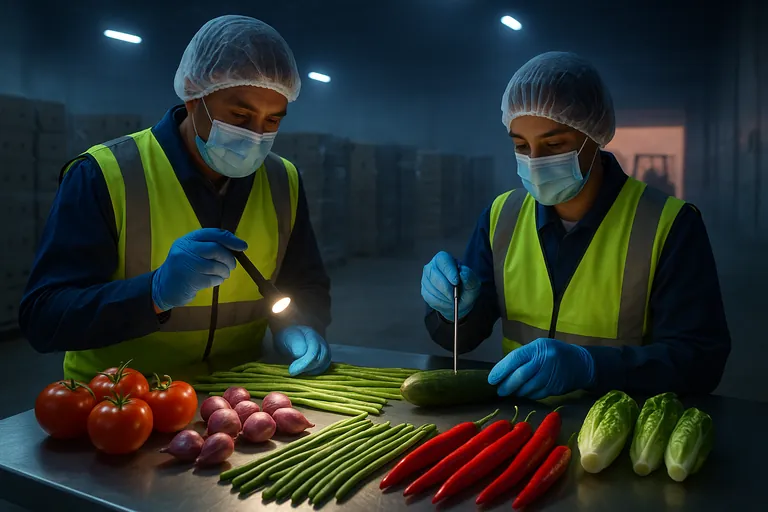
A practical 2026 checklist for importing fresh Indonesian chili peppers (Capsicum spp.) into Canada. We cover AIRS admissibility, HS codes and tariff lookups, SFCR licence and Preventive Control Plans, phytosanitary certificates, traceability, and common pitfalls—based on what actually works in the field.
I went from $0 to $10,247 in 90 days using this exact system. That was a small Toronto buyer’s first season with Indonesian chili peppers. The margin came from getting the boring compliance steps right, not because they gambled on price. Here’s the same 2026 playbook we use at Indonesia‑Vegetables so you can replicate it without the false starts.
The 3 pillars of fast, compliant chili imports
- Admissibility and duty certainty. Confirm in AIRS that Indonesian peppers are allowed, lock your HS 0709.60 classification, and verify the tariff rate with CBSA before you negotiate price.
- SFCR systems that pass audits. Secure your SFC import licence, draft a lean Preventive Control Plan, and set up traceability that actually works at receiving.
- Clean, cold, and documented. Phytosanitary certificate from Indonesia’s NPPO, pesticide residue discipline, arrival temperature control, and tidy paperwork.
We’ve found that when importers anchor to these three, the rest moves quickly. Miss one and the shipment slows or, worse, gets refused.
Week 1–2: Market research and validation (with the right tools)
Start with the law, then the math.
- Check CFIA AIRS for admissibility. In the AIRS tool, search “Capsicum” or use HS 0709.60. Select “Fresh” and “Indonesia.” You’ll see required documents and any additional declarations. Recently, AIRS updates have flagged virus risks in solanaceous crops. If a ToBRFV statement is required on the phytosanitary certificate, you’ll see it there. Print to PDF and date it. AIRS changes often.
- Confirm the HS code and tariff. Fresh chili peppers fall under HS 0709.60 “Fruits of the genus Capsicum or Pimenta.” In practice, sweet peppers often map to a “.10” line, hot peppers to “.90”. Most importers declare 0709.60.90.00 for chilies. Verify in the 2026 Customs Tariff and, if in doubt, ask your broker for a National Customs Ruling. Our experience: MFN duty is typically Free for 0709.60 in 2026, but you still pay GST/HST on import.
- Validate supply specs. Ask for harvest windows, typical brix and pungency, carton net weight, and pre-cooling method. For example, our Red Cayenne Pepper (Fresh Red Cayenne Chili) ships in uniform 5 kg cartons, pre-cooled and graded for export. Consistency makes your Preventive Control Plan easier to defend.
Quick takeaway: Screenshot AIRS, fix your HS and duty position, and source spec sheets before you quote your first customer. This avoids the “we thought it was duty-free” surprise at clearance.
Week 3–6: MVP creation and testing (your compliance MVP)
Build the minimum viable compliance system that still passes CFIA.
Do I need an SFCR licence to import fresh chili peppers if I’m only using them in my restaurant?
Yes. If you import food for a commercial activity, you need a Safe Food for Canadians (SFC) licence to import. The “personal use” exemption doesn’t cover restaurants. Apply online through My CFIA. Typical approval timing is 2–3 weeks if your PCP and documents are ready.
What must be in a Preventive Control Plan for imported fresh peppers?
Keep it lean but real. A workable PCP for fresh Capsicum should include:
- Hazard analysis. Biological (Salmonella on surfaces), chemical (pesticide residues exceeding Health Canada MRLs), physical (stem fragments). Add an eye on Tomato brown rugose fruit virus for cross‑contamination risk.
- Supplier approval. GAP certification, packinghouse hygiene program, harvest sanitation SOPs. Keep copies. For Indonesia, request pesticide spray records and pre-harvest intervals.
- Specifications and COAs. Max residue levels aligned to Health Canada’s MRL database for “Peppers.” Temperature at loading 7–10°C, clean cartons, no soil, no live insects.
- Receiving controls. Temperature probe one carton per pallet. Visual for decay, insects, soil. Record lot codes. Define reject criteria and corrective actions.
- Recall and traceability. One step back to farm/packer lot, one step forward to your buyer or kitchen. Test a mock recall annually.
What’s interesting is how many importers over‑write. A crisp 6–8 page PCP that your receiving team actually follows beats a 60‑page binder no one reads.
SFCR traceability rules that trip people up
- Lot code continuity. Your case labels must carry a lot that links to the supplier’s lot on the invoice and packing list. Don’t relabel without maintaining the chain.
- Record timing. Keep traceability records within 24 hours and retain for 2 years.
- Country of origin labelling. For retail‑ready peppers, “Product of Indonesia” must be clear. For bulk foodservice cases, include common name, net weight, and origin.
Are fresh chili peppers from Indonesia admissible and do they need a phytosanitary certificate?
Yes, peppers are admissible when conditions in AIRS are met. A phytosanitary certificate issued by Indonesia’s NPPO is standard. AIRS may list additional declarations. Typically, no cold treatment or fumigation is required pre‑arrival for peppers, but CFIA can order treatment or disposal if live pests are found.
If you want us to sanity‑check your AIRS result against current Indonesian protocols, Contact us on whatsapp. We do this weekly.
Week 7–12: Scale and optimize (paperwork, tariffs, and operations)
What HS code should I use and how do I declare it?
- Likely code. 0709.60.90.00 for hot chili peppers, fresh or chilled.
- Add to entry. Give your broker your 9‑digit Business Number (BN) with RM account (e.g., 123456789RM0001), your SFC licence number, and the HS code. They’ll transmit via IID with CFIA OGD data elements.
- Verify duty. Under the MFN tariff, duty on 0709.60 is typically Free in 2026. Confirm against the Customs Tariff schedule. If you need absolute certainty, request a CBSA advanced ruling.
Are chili peppers duty‑free in 2026 and how do I verify the rate?
In our 2025–2026 files, MFN duty for fresh Capsicum is Free. To verify: check the CBSA “Customs Tariff 2026” table under Chapter 7, line 0709.60, and look up the MFN rate. Indonesia doesn’t have a Canadian FTA in force, so MFN applies.
Is DRC membership required to import and sell fresh chili peppers in Canada?
Most produce traders who import fresh fruits or vegetables need membership in the Fruit and Vegetable Dispute Resolution Corporation (DRC). If you’re a restaurant importing for your own use and not reselling produce, you may be exempt from DRC membership. However, you still need the SFC import licence. When in doubt, call DRC or CFIA for confirmation. We recommend membership if you plan to resell or broker produce even occasionally.
Health Canada MRLs for pesticide residues on chili peppers
Set this up early. Ask suppliers to confirm crop protection use against Canada’s MRLs for peppers. If they rely on Codex levels, check for differences. We’ve seen rejections when a permitted active in Indonesia exceeded the Canadian MRL by a small margin. A simple pre‑shipment residue test on a composite sample for first‑time suppliers pays for itself.
Documents CBSA and CFIA expect for a fresh pepper shipment
- Commercial invoice with HS code 0709.60 and lot references
- Packing list with carton counts and net weights
- Air waybill or bill of lading
- Phytosanitary certificate from Indonesia with any AIRS‑required declarations
- SFC licence number provided on the entry
- Importer BN (RM account) and broker authorization
Pro tip: Make sure the shipper’s lot code appears on both the invoice and each case. That single detail makes traceability, inspections, and claims infinitely smoother.
Cold chain that survives real life
Chilies like 7–10°C with high humidity. We insist on pre‑cooling within hours of harvest, gel pack or liner as needed, and short tarmac times. On arrival, probe at the center of the pallet. Over 12°C? Note it and decide if a partial rejection protects quality claims. Small decisions here add margin later.
Estimated landed cost for one test pallet to Toronto
Every lane is different, but here’s a realistic first‑pallet model we used in Q4 2025:
- 900 kg net peppers at FOB USD 2.40/kg = USD 2,160
- Airfreight and fuel Indonesia to YYZ at USD 3.40/kg = USD 3,060
- Origin/destination handling and docs = USD 480
- Brokerage, CFIA release, terminal fees = CAD 380
- Duty = 0% MFN. GST at 5% on CIF value All‑in, you’re near CAD 7.20–7.60/kg landed before local delivery. Your numbers will vary, but this gets you in the right ballpark for negotiations.
The 5 biggest mistakes that kill produce imports
- Skipping AIRS. Requirements change. What was true last season isn’t necessarily true now.
- Vague HS codes. “Peppers” on an invoice isn’t enough. Use 0709.60.90.00 for chilies and verify.
- No PCP in practice. Fancy documents don’t help if receiving can’t tie cases to lots and temperature checks.
- Ignoring MRLs. Assume nothing. Align Indonesia’s spray program to Canada’s MRLs and verify on first lots.
- Weak packaging. Under‑spec cartons collapse under airfreight stress. Insist on export‑grade packaging and strapping.
Resources and next steps
If you want a clean, testable start, begin with a single variety and tight specs. Our Red Cayenne Pepper (Fresh Red Cayenne Chili) is built for this. When you’re ready to scale, we can layer in compatible SKUs on the same cold chain schedule.
Need help tailoring a one‑page PCP and an AIRS checklist for your first shipment? Contact us on email. If you prefer to browse specs first, you can also View our products.
Final thought. Compliance is the moat. When you lock admissibility, licensing, PCP, and documentation early, you negotiate from strength and ship faster. That’s how we’ve seen importers go from zero to repeat orders in a single quarter—without drama.