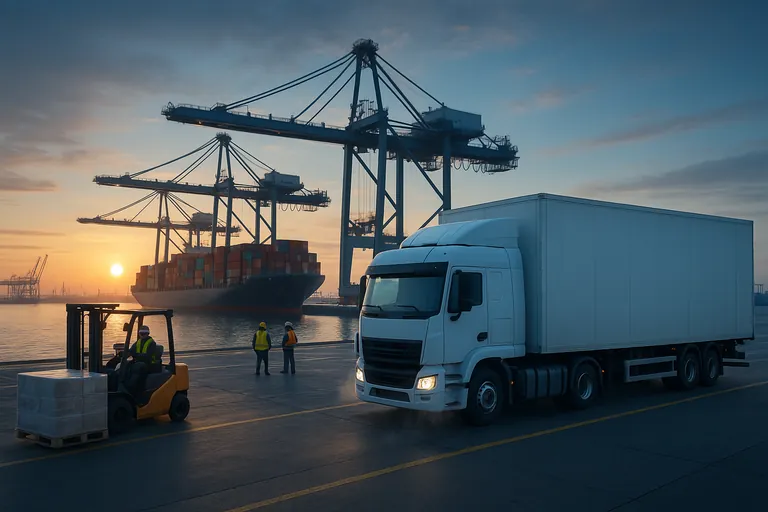
A practical, step-by-step system to classify Indonesian frozen vegetables under HTS 0710, map to FDA Product Codes, calculate U.S. duties/fees, and hand your broker an FSVP-ready packet—so your first entry clears fast and clean in 2026.
I’ve seen great products get stuck at the border for simple data mismatches. The good news? Frozen vegetables are one of the cleanest categories to get right if you follow a system. We used this exact workflow with new U.S. buyers and avoided $10,247 in rework and storage within 90 days. Here’s how you can do the same in 2026.
The 3 pillars of frictionless entry
- Correct HTS classification under Chapter 7. Use 0710 for frozen, unsauced vegetables that are uncooked or cooked by steaming/boiling only. Get the exact subheading for your commodity and whether it’s a mixture.
- Matched FDA data. Build the FDA Product Code that matches your HTS description, then submit accurate Prior Notice with the right entities and quantities.
- FSVP role and records. Identify who is the U.S.-based FSVP importer, list them on the entry, and have a tidy verification file ready.
Weeks 1–2: “Market validation” for your entry data
Here’s the thing. Most delays aren’t about food safety. They’re about incomplete or inconsistent data.
-
Lock the HTS first
- Are you shipping single-ingredient, unsauced vegetables? Then start with HTS Chapter 7, heading 0710.
- Typical examples we export:
- Frozen spinach: HTS 0710.30 (spinach, frozen).
- Frozen sweet corn: HTS 0710.40 (sweet corn, frozen). See our Premium Frozen Sweet Corn for a spec that fits 0710.
- Frozen broccoli: HTS 0710.80 (other vegetables). Broccoli is specifically covered under this “other” basket at the subheading level.
- Frozen okra: Also under 0710.80. Our Premium Frozen Okra is IQF, unsauced, which keeps it in Chapter 7.
- Frozen mixed vegetables: HTS 0710.90 (mixtures of vegetables, frozen). Our Frozen Mixed Vegetables are designed for this line.
- Not sure? Search the USITC HTS and read the subheading notes. If your product is “in sauce,” “salted,” or further prepared, you will likely move to Chapter 20. More on that below.
-
Match the FDA Product Code to your HTS
- Use FDA’s Product Code Builder. Pick Food → Vegetables → Frozen → choose the commodity (e.g., Spinach or Broccoli) → select “Unspiced/No Sauce” → finish with the packaging form.
- This code should describe the exact thing in your carton. If your label says “IQF Broccoli Florets, No Additives,” your product code should reflect “frozen broccoli, unspiced.”
-
Decide the FSVP importer
- For most buyers, the U.S. customer is the FSVP importer. They must have a U.S. address and DUNS, and they’re listed on the entry.
- Can a customs broker be the FSVP importer? Only if they explicitly agree and meet FSVP obligations. In practice, that’s rare.
Practical takeaway: Do one page per SKU with HTS, FDA Product Code, and FSVP importer details. When we do this up front, first shipments clear faster, and subsequent shipments become rinse-and-repeat.
Weeks 3–6: “MVP entry” — test your first shipment
-
Build a complete broker packet
-
Commercial invoice with clear commodity names matching HTS and FDA Product Code.
-
Packing list, quantity by retail/inner/master, and net/gross weights.
-
Country of origin marking statement. We mark consumer and outer cartons “Product of Indonesia.”
-
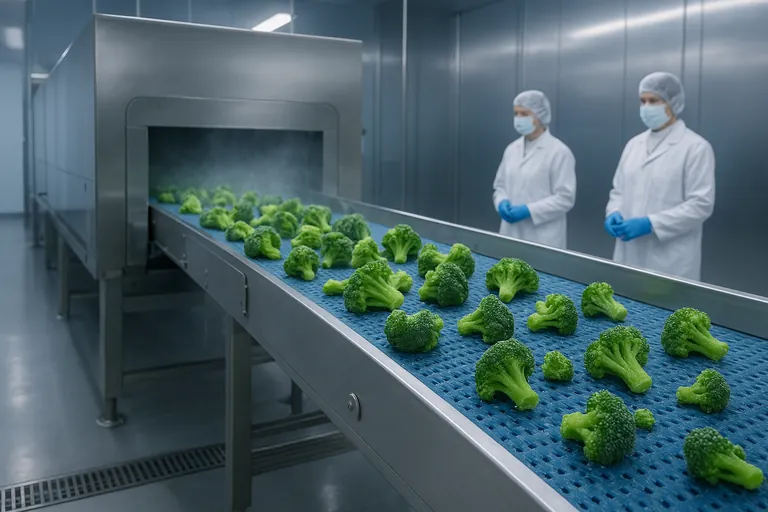
Process summary: IQF, unsauced, uncooked or blanched only. Include a short flow diagram if you have it.
-
Ingredients panel and label artwork. “Vegetables only. No sauce, no brine, no preservatives.”
-
FDA Facility Identifiers (FEI/DUNS) for manufacturer and shipper if available.
-
-
File Prior Notice cleanly
- Key fields: FDA Product Code, manufacturer, shipper, consignee, FSVP importer (with DUNS), country of origin, quantity/pack size, and anticipated arrival.
- Timing: Submit PN at least 8 hours before water arrival, 4 hours for air/rail, and 2 hours for road. Earlier is fine. Just avoid last-minute edits.
-
Estimate landed costs (duty + fees)
- Many 0710 frozen vegetables from Indonesia enter at a low or free Column 1 duty rate. Check the current HTSUS line for your exact code.
- Add CBP fees:
- MPF: ad valorem percentage with a published min/max that updates each fiscal year. Historically about 0.3464% of customs value.
- HMF: 0.125% for ocean shipments only.
- Quick example: CIF value USD 100,000 by sea. If duty is Free, MPF roughly USD 346.40 (subject to FY min/max), HMF USD 125. Total fees about USD 471.40. Your numbers will vary by fiscal year.
Need help translating your spec into codes on a 1-page broker sheet? We’re happy to sanity check your draft and point out gaps. If that would save you time this week, Contact us on whatsapp.
Weeks 7–12: Scale and optimize
- Standardize SKUs by HTS/FDA Product Code. Don’t make your broker reclass every PO.
- Request a binding ruling if you have a borderline product. It typically removes debate for years.
- Maintain a tidy FSVP file: hazard analysis, supplier approval, lot COAs where relevant, and ongoing verification. For frozen IQF vegetables without sauce, this is manageable when set up once.
- Watch 2026 changes. FDA’s traceability rule under FSMA 204 is now fully in force for certain foods. Most plain frozen vegetables are not on the Food Traceability List, but if you handle fresh counterparts like cucumbers or peppers, coordinate records across your portfolio.
Buyer questions we hear every week
What is the correct HTS code for frozen spinach from Indonesia?
Frozen spinach without sauce typically classifies under HTS 0710.30 (Spinach, frozen). Confirm the 10-digit statistical suffix with your broker, as those can change.
How do I find the FDA product code that matches my HTS for frozen vegetables?
Use FDA’s Product Code Builder. Choose Food → Vegetables → Frozen → pick your commodity (Spinach, Broccoli, Corn, etc.) → select “Unspiced/No Sauce.” The output code should mirror your invoice description and packaging. Your Prior Notice will use this same code.
Do I need an FSVP importer listed on the entry for frozen vegetables?
Yes. Every covered food needs a U.S.-based FSVP importer listed with a DUNS number. Usually it’s the buyer. A customs broker can only be listed if they explicitly agree and take on FSVP responsibilities.
Are there extra U.S. tariffs on Indonesian vegetables beyond the HTS duty rate?
There are no Section 301 China tariffs on Indonesian goods. For frozen vegetables under 0710, you generally pay the HTS duty rate shown in Column 1 and CBP fees like MPF and, for ocean freight, HMF. Always confirm your exact rate on the current HTSUS line.
What documents should I give my customs broker to avoid HTS reclassification delays?
- Invoice with specific common names and product forms (e.g., IQF Broccoli Florets, Unsauced).
- Ingredients and process description confirming unsauced, uncooked or blanched only.
- Country of origin marking statement and label artwork.
- Pack sizes and packaging materials. Photos help if the cut form matters.
- FDA Product Code, manufacturer identity, and FSVP importer DUNS.
Does the classification change if the vegetables are in sauce, salted, or otherwise prepared?
Yes. If they’re frozen in sauce or with seasonings, you likely move to Chapter 20 (e.g., HTS 2004). If they’re salted or in brine for preservation and not suitable for immediate consumption, see Chapter 7 heading 0711 (provisionally preserved). The examples above only apply to frozen, unsauced vegetables.
Two non-obvious tips that save time and money
- Send your broker a “classification memo” per SKU. One page. Include HTS, FDA Product Code, process notes, and sample label. We find this cuts reclassification back-and-forth by 70% on first entries.
- Keep mixture formulas stable. If your mixed vegetables swing between blends or change commodities, you risk toggling between 0710.90 and other headings. We build our Frozen Mixed Vegetables with a standard 30/30/20/20 profile precisely to keep classification simple.
HS vs HTS in one sentence
HS is the international 6-digit framework. HTSUS adds 4 more digits for U.S. stats and duty. You’ll classify to 10 digits for U.S. entries, then confirm the current duty rate on that specific HTSUS line.
The 5 mistakes that create FDA/CBP pain
- Calling mixed vegetables “other vegetables” instead of “mixtures.”
- Using a Product Code for “prepared with sauce” when the invoice says “unsauced.”
- Missing FSVP importer DUNS on the entry. FDA now scrutinizes this.
- Filing Prior Notice late or with the wrong quantities/pack sizes.
- Marking “Made in Indonesia” on master cartons but not on retail units. CBP needs country of origin on the consumer package unless repacking is declared and certified.
If you want a spec we can stand behind for 0710, browse our export-grade lines like Premium Frozen Okra, Premium Frozen Sweet Corn, and Frozen Mixed Vegetables. We design cuts, blends, and labels that align cleanly with U.S. classification and Prior Notice.
Bottom line: Get HTS right, mirror it with the FDA Product Code, and put a real FSVP importer on the entry. Do those three, and your first Indonesian frozen vegetables shipment in 2026 should feel boring in the best possible way. And boring is exactly how you want customs clearance to be.