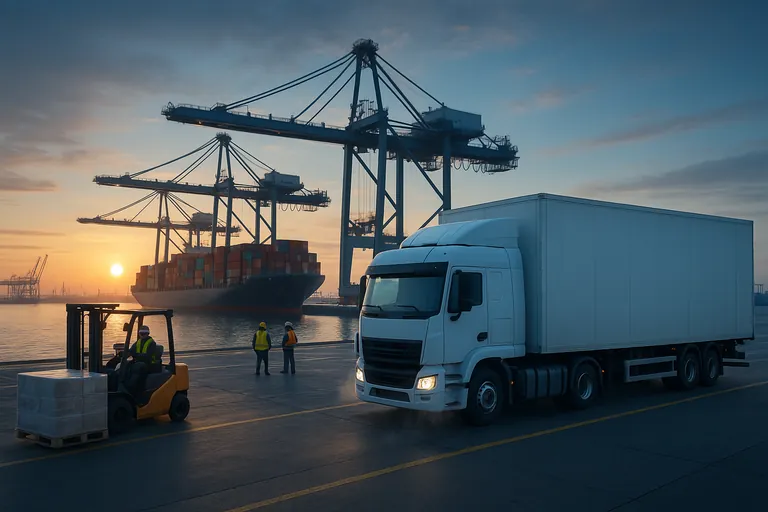
Practical, field-tested reefer settings and SOPs for shipping IQF vegetables from hot, humid Indonesian ports. Exact temperature, vent, defrost, pre-cool vs cargo pre-chill, T-floor airflow, and data logger placement—so you can ship with confidence and reduce claims.
If you’ve ever opened a claim because your IQF peas arrived clumped or your sweet corn showed freezer burn, you know how unforgiving tropical origin conditions can be. We’ve spent years shipping frozen vegetables from Indonesia’s ports in 30–35°C heat with 80–90% humidity. The playbook below is what’s actually reduced our temperature-variance and dehydration claims to near zero.
The 2026 reality from Indonesian origins
Hot, wet air is your enemy. It rushes into open containers, condenses on cold metal, and ices up coils fast. Over the last 6–12 months, most major carriers expanded Remote Container Management (RCM). They can now see if your fresh-air vent was left open or if supply temps spiked during stuffing. Buyers increasingly ask for shared RCM views. Good news. If you follow the right SOP, those live graphs will work in your favor.
The 3 pillars of trouble‑free IQF reefer shipments
- Pillar 1. Correct machine settings. Temperature, vent, and defrost must match frozen cargo requirements. No improvisation.
- Pillar 2. Cold cargo and disciplined stuffing. Product must be at core temperature before loading, and door-open time must be tight.
- Pillar 3. Protected airflow. T-bar floors do the heavy lifting. Don’t block them with pallets or plastic.
Use these pillars as your origin-side checklist. Let’s get specific.
What temperature should a reefer be set to for IQF vegetables?
Set the reefer to -18°C supply air. That’s the global standard for frozen vegetables and aligns with label and regulatory expectations.
When do we use -20°C? Only if the buyer’s spec demands it, or if you’re running very long transits through equatorial hubs with a risk of prolonged power breaks. -20°C adds margin but can slightly increase dehydration risk if packaging is marginal. For items like Premium Frozen Sweet Corn and Frozen Mixed Vegetables, -18°C has been consistently reliable when everything else is done right.
Practical takeaway: Default -18°C supply. Document any deviation in the booking and on the packing list.
Should the reefer vents be fully closed for frozen cargo like IQF peas and corn?
Yes. Set fresh-air exchange to 0 m³/h. Keep the vent fully closed for IQF vegetables. Introducing humid ambient air is a fast track to frost build-up and freezer burn. In 2025 we saw carriers start flagging non-zero vent positions on RCM for frozen cargo. Don’t leave room for debate.
Do I pre-cool the container, the cargo, or both before stuffing?
Here’s the nuance that saves shipments.
- Always pre-chill the cargo. IQF product must be -18°C core through and through before it leaves the freezer. Don’t rely on the container to pull down temperature.
- If you have a cold room or dock at ≤ -10°C. Pre-cool the container to setpoint. Run a manual defrost just before loading so coils start clean. Load with the unit on. This is true cold stuffing and is ideal.
- If you’re stuffing at ambient tropical temperatures. Do not pre-cool the empty container. Keep the unit off while doors are open to avoid sucking wet air across a cold coil. Load fast. Close doors fully. Then power on and verify supply/return temps stabilize within 20–40 minutes.
We’ve found this single switch—pre-cool only when you can maintain a cold loading environment—cuts icing incidents dramatically.
What defrost setting is best to avoid ice build-up?
Use Auto or Demand defrost for frozen cargo. Avoid fixed-timer defrost cycles that may heat the coil too often. Don’t turn defrost Off.
Our standard:
- Defrost mode. Auto/Demand.
- Drain/evaporator heaters. On.
- Manual defrost. Run once right before stuffing if the container was pre-cooled in a cold room. Otherwise, not needed unless you see performance drift.
If the unit offers “Supply Air Control” for frozen and “Return Air Control” for chilled, select Supply Air Control. It yields tighter product temperature.
How long can reefer doors stay open during stuffing in Indonesia?
Short answer. Less than you think.
- Ambient dock. Target a net door-open time under 15 minutes total. Stage pallets next to the container. Use two forklifts if available. Assign a spotter so no one pauses in the doorway.
- Cold room dock (≤ -10°C). You can safely extend to 30–45 minutes because the air you’re introducing is already cold and dry. Still, don’t dawdle.
Rule of thumb. If people are sweating, your reefer is too. Every extra minute of tropical, humid air increases condensation risk on coils and ceiling panels.
How many data loggers do I need and where should I place them?
For a 40’ HC reefer, use four to five independent loggers in addition to the reefer’s own data:
- Front near the bulkhead. One logger 10–20 cm from the supply plenum, mid-height.
- Middle of the load. One logger inside a carton at mid-height.
- Rear near the doors. Two loggers: one high, one low. The door area is the warmest and quickest to reveal loading issues.
- Optional fifth. Inside a retail inner bag for highly sensitive SKUs.
Start loggers 30–60 minutes before loading. Note container number, start time, and timezone on the C/M and packing list. If your carrier offers RCM access, give buyers view-only access. It builds trust and speeds claim resolution.
Loading pattern to protect T-bar airflow for frozen cargo
Think of airflow as a loop: cold air out along the floor. Up at the doors. Back along the ceiling to the unit. Don’t break the loop.
- Keep the T-floor completely clear. No sheets, no cardboard, no torn stretch film blocking channels.
- Pallets. Use vented pallets with slats parallel to the container width so air can move under the load along the T-bars. No pallet overhang beyond pallet deck.
- Clearances. 7–10 cm off the front bulkhead. 8–10 cm off sidewalls. 12–15 cm to the ceiling. Don’t press cartons against the front grille.
- Block stow is fine for frozen. Chimneys aren’t required if the floor is clear and top clearance is maintained.
- At the doors. Use airbags or dunnage to prevent top collapse and to maintain the return-air path.
This is where clumping often starts. If the door zone gets warm because boxes sag and block the return path, you’ll see partial thaw and re-freeze.
Preventing IQF clumping during sea freight
- Stability beats extra cold. Hold a steady -18°C with minimal door-open time. Cycling between -15°C and -25°C is worse than a flat -18°C.
- Packaging. Well-glazed or appropriately lined bags hold surface moisture better. For 1 kg bags, avoid voids that let air pump through open corners.
- Product specifics. Edamame skins bruise if cartons are overloaded, which can weep and freeze together. Our Premium Frozen Edamame ships best in tight, well-vented cartons. For cuts like Premium Frozen Okra, keep cartons upright so slices don’t settle and compress at the bottom.
Return air vs supply air: what should I monitor?
Control by supply air for frozen cargo. That’s the setpoint the reefer should maintain at the outlet.
Monitor both. Supply tells you the machine’s output. Return tells you what the cargo is feeding back. If return drifts upward over days while supply is steady, suspect airflow issues or an overpacked door area.
IQF reefer PTI and origin checklist
Before you accept an empty reefer at the yard or depot:
- PTI passed within 30 days. Ask for the PTI slip. Verify controller type and firmware if listed.
- Fresh-air vent fully closed and seals intact.
- T-floor clean, drains clear, no debris.
- Door gaskets tight. No light leaks.
- Probe calibrations OK. Perform an on-site supply/return check after plug-in.
- Genset (if used) fueled and tested. Indonesian yards can have dead zones for power, so confirm plug-in points.
On stuffing day:
- Product cores ≤ -18°C. Random-check with a calibrated probe.
- If cold-stuffing, pre-cool container to setpoint and run manual defrost right before opening doors.
- If ambient-stuffing, keep unit Off during loading. Load fast. Close doors. Turn On and verify supply returns to setpoint within 20–40 minutes.
- Loggers placed and recorded. RCM share set up.
Is -18°C or -20°C better for mixed IQF vegetables shipped by sea?
For mixed veg, -18°C supply is our default. We use -20°C if the buyer spec requires it, if there’s a high-risk transshipment, or if historical lane data shows recurring power breaks. Our Frozen Mixed Vegetables move reliably at -18°C when vents are closed and airflow is protected.
How humidity and freezer burn play together in frozen exports
Humidity setpoints on reefers don’t apply to frozen cargo. Freezer burn is about moisture loss and air exchange. Keep vents closed, packaging right-sized, and temperatures flat. That’s how you keep color and texture intact through long voyages.
Putting it all together
Here’s the thing. Most claims trace back to just three mistakes: an open vent, a blocked T-floor, or door-open time that turned the container into a dehumidifier. Fix those and your supply/return graphs will finally look boring. Boring graphs mean beautiful arrivals.
Need help adapting these settings to your factory, lane, or SKUs? We’re happy to troubleshoot loading layouts or logger plans. You can Contact us on whatsapp and we’ll share a lane-specific SOP we actually use in Indonesia.
If you want to see the IQF lines we run and the products these SOPs were built around, you can also View our products.