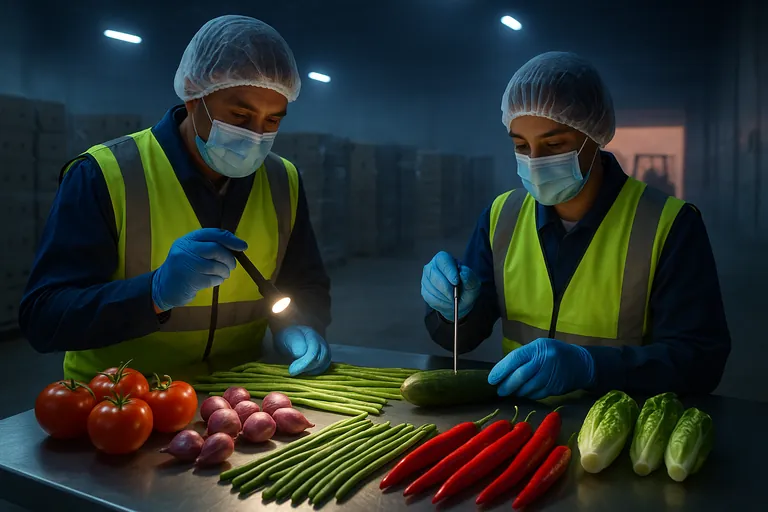
A practical, step-by-step guide to get SMETA audit scope right for Indonesian vegetable supply chains that use a packhouse plus smallholder farms. What retailers accept, how to define site boundaries, how many farms to sample, and which documents prove control.
Hook: what actually gets retailer acceptance in 2026
We’ve cut audit scope rejections by buyers from 30% to nearly zero by using one repeatable approach. The pattern is always the same. Define the site properly. Evidence real control over farms. Sample intelligently and document the chain of custody. When we apply this on products like Japanese Cucumber (Kyuri), Tomatoes, and Red Radish, UK and EU buyers stop pushing back on scope and start talking programs and volumes.
Here’s the thing. SMETA is not a certificate. It’s an audit methodology and set of outputs that your buyers may accept if the scope matches how you actually operate. That’s where most suppliers stumble.
The 3 pillars of getting SMETA scope right (and accepted)
- Site definition and control model. Be crystal clear on what is “the site” in Sedex. Packhouse only. Or packhouse plus farms under your control.
- Farm mapping and evidence. Show you know who your growers are, where they are, and what influence you have over labor, inputs, and production.
- Risk-based sampling and traceability. Plan farm visits with a defensible sample. Prove product flow from farm to packhouse with documents that stand up to an APSCA auditor.
If you get those three right, the rest falls in place.
Weeks 1–2: define the site and complete the SAQ
This is your “market validation” moment. You’re checking if your current operating model supports your intended audit scope.
- Create or update the Sedex site profile. For the packhouse, include legal entity, GPS, headcount by contract type, use of labor providers, dormitories, and processes (washing, cutting, cold storage). For agriculture, add associated locations and production activities if farms are in scope.
- Decide packhouse-only vs multi-site. If you set harvest schedules, provide inputs or PPE, contract field labor, or run transport from farm to packhouse, you likely have control. That points to a multi-site audit covering farms.
- Complete the Sedex SAQ. Do it for the packhouse and, if relevant, for either each farm or for representative farm groups by crop/region. In our experience, buyers push back when only the packhouse SAQ exists while farms are claimed “in scope.”
Quick takeaway: Don’t guess scope. Write it down in the Sedex site description and align your SAQs to match.
Weeks 3–6: build evidence and your farm sampling plan
Think of this as your MVP. You’re proving what you say is true with paper and practice.
-
Map the farms. Keep a current list with grower names, GPS, hectares, workforce size in peak season, and sourcing history. Split into logical clusters by geography and crop. For example, our Baby Romaine (Baby Romaine Lettuce) cluster sits at higher altitude farms, while Red Cayenne Pepper (Fresh Red Cayenne Chili) growers are in hotter lowlands.
-
Evidence control. Auditors don’t accept declarations. They accept documents. The strongest proofs we’ve used:
- Framework supply agreements or MOUs with growers that specify labor standards, access for audits, and right to terminate for breaches.
- Input control. Records of seed, fertilizer, or PPE we provide or approve. Procurement SOPs that require only approved agrochemicals.
- Technical service logs. Field visit reports, training attendance, advice given, photos.
- Harvest and logistics control. Harvest plans, picking crew assignment, vehicle loading logs, and intake QC tied to farm codes.
- If you use labor providers. Contracts, due diligence, licenses, worker lists, and payment proofs.
-
Traceability chain. Build a neat farm code through to packhouse lot code. Link harvest tickets, transport notes, intake logs, and finished goods. This is vital for fresh products like Tomatoes or Japanese Cucumber (Kyuri).
Quick takeaway: If you can’t prove control on paper, the farms don’t belong in your scope. You can still do a packhouse-only SMETA, but manage buyer expectations.
Weeks 7–12: schedule the audit and prepare for CAPR
Timing and people matter here.
- Schedule during active field work. Auditors need to see workers in the fields. For Indonesia, that often means aligning with peak harvest windows by region. Don’t schedule when fields are fallow.
- Choose an APSCA auditor for Indonesia. Many UK/EU retailers now expect APSCA-registered auditors. Ask for the auditor’s APSCA number and check it.
- Align on pillars. For agriculture, buyers increasingly request 4-Pillar SMETA. That adds Environment and Business Ethics. It doesn’t change which sites are in scope, but it changes the evidence needed at farms for water, pesticide storage, waste, and emissions.
- Think ahead to CAPR acceptance. If non-conformances are found at sampled farms, buyers usually want CAPR actions rolled out to all farms in scope, not only those sampled. We plan templated toolbox talks, policy re-signatures, and photo logs ready to deploy in 2–3 weeks across every farm.
Need help mapping your scope and sample? You can Contact us on whatsapp. A 20-minute screen-share is often enough to de-risk the plan.
Practical Q&A from buyers and auditors
Does a SMETA audit for Indonesian vegetables need to include farm sites or just the packhouse?
In our experience, packhouse-only SMETA works if you’re a pure trader with no operational control over farms. You buy delivered product, don’t set harvest labor, don’t supply inputs, and don’t manage transport. If you influence or direct any of those, expect buyers to ask for farms in scope. For fresh categories like Loloroso (Red Lettuce), Carrots (Fresh Export Grade), and Purple Eggplant, UK/EU retailers almost always expect farm coverage.
How do I define the “site” and boundaries for SMETA in a smallholder network?
Set the legal entity and physical boundaries for the packhouse. Then define “associated locations” for farms you control. Control means documented influence over labor conditions, inputs, or production practices. Add GPS for each farm, headcount at peak, and the relationship type. If farms are independent and you only have purchase terms, don’t include them. State that clearly in the site scope.
What sampling method and minimum number of farms should be included in a SMETA multi-site audit?
There isn’t a single universal formula in SMETA. Retailers and APSCA auditors tend to accept a risk-based approach that typically looks like this:
- Start with the square root of the number of farms in scope. Round up. For 40 farms, plan 7. For 120 farms, plan 11–12.
- Increase the sample for higher-risk factors. Use more coverage if there are labor providers, migrant or seasonal workers, remote farms, first-year suppliers, or previous non-conformances.
- Always include the largest farm by headcount, one newly on-boarded farm, and at least one remote site. Confirm with your buyer before fieldwork. Some specify percentages or caps per country and crop.
Which documents prove that farms are under the packhouse’s control for inclusion in the audit scope?
We’ve seen these accepted repeatedly:
- Signed grower agreements with audit access and labor standards clauses.
- Farm registry with GPS, crop calendars, and assigned field technicians.
- Records of inputs or PPE supplied or approved by you.
- Field visit logs, training registers, photos, and corrective actions closed.
- Harvest plans, crew rosters, vehicle dispatch, and intake logs linking farm to lot.
- Labor provider due diligence and contracts if used in fields. If you don’t have at least three of the above, expect pushback on multi-site scope.
Will UK/EU retailers accept a packhouse-only SMETA for Indonesian vegetables?
Sometimes. Commonly accepted when you source from independently certified grower groups that your company doesn’t control, or for IQF/frozen where farming is outside your scope and you only process. For products we process ourselves like Premium Frozen Sweet Corn or Frozen Mixed Vegetables, buyers often focus on the processing site. But for fresh produce with direct smallholder sourcing, packhouse-only is often rejected.
Do SMETA 2-Pillar vs 4-Pillar requirements change the audit scope for agriculture?
Pillars don’t change which sites must be included. They change what is examined. 4-Pillar adds Environment and Business Ethics. For farms, that means evidence of water use and permits where applicable, pesticide storage and application records, waste handling, and basic emissions controls. If you commit to 4-Pillar, prepare farm-level environmental evidence.
Are APSCA-certified auditors required for retailer-accepted SMETA audits in Indonesia?
Many major UK and EU retailers now require APSCA-registered auditors or member firms. We recommend confirming auditor APSCA IDs and listing your buyer’s requirement in the audit booking email. It avoids re-audits.
Five mistakes that kill SMETA scope acceptance
- Vague site descriptions. “Packhouse with suppliers” isn’t enough. Spell out which farms are in or out, with counts and regions.
- No SAQ for farms. Claiming multi-site but only the packhouse SAQ is uploaded is a red flag.
- Weak traceability. If you can’t tie farm codes to intake and despatch, auditors doubt control.
- Under-sampling high-risk clusters. If you use labor providers, sample more than the square-root rule.
- CAPR that fixes only sampled farms. Buyers expect rollout to all farms in scope, with proof.
Resources and next steps
If you’re preparing a 2026 program across multiple categories, sanity-check scope crop by crop. Fresh Onion and Beetroot (Fresh Export Grade) usually require farm inclusion. Some frozen lines like Premium Frozen Okra or Premium Frozen Potatoes can be packhouse-only if you don’t control farming. When in doubt, align with your buyer’s “retailer audit acceptance” note before booking. That single email saves weeks.
Questions about your specific network or how to link farms to your Sedex site reference and SAQ? You can Contact us on whatsapp. If you’re comparing category specs at the same time, feel free to View our products.